Astro Information

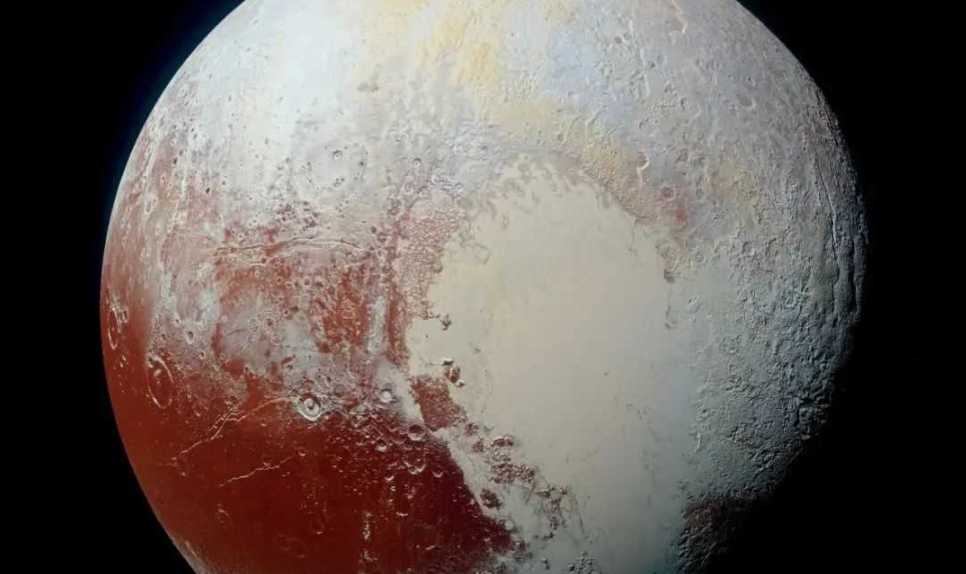
New Horizons' Near-Infrared Image Unveils Pluto's Diverse Surface

A near-infrared image of Pluto captured by NASA's New Horizons spacecraft offers unprecedented insights into the dwarf planet's complex surface. By combining this infrared data with visible-light imagery, scientists can discern the diverse color variations and material types that paint Pluto's icy landscape, revealing clues about its geological history and atmospheric interactions.

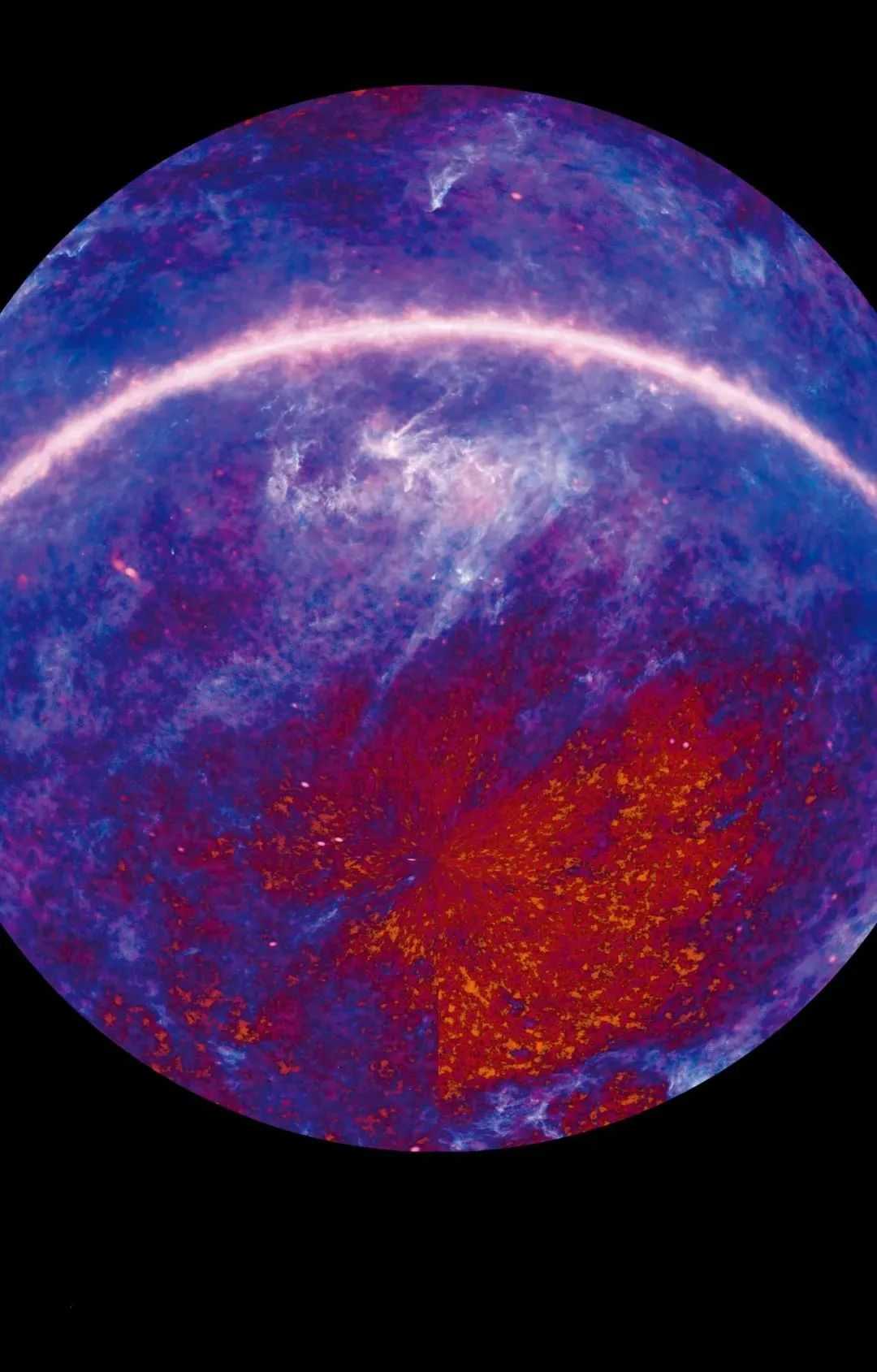
Planck Satellite’s Microwave View Reveals Milky Way’s Disk and Cosmic Background

A striking microwave image of the Milky Way captured by the European Space Agency’s Planck satellite offers a unique perspective on our galaxy and the early universe. The image highlights the galaxy’s prominent disk as a bright, glowing stripe, while faint red regions in the background represent the cosmic microwave background (CMB)—the oldest light in the universe.

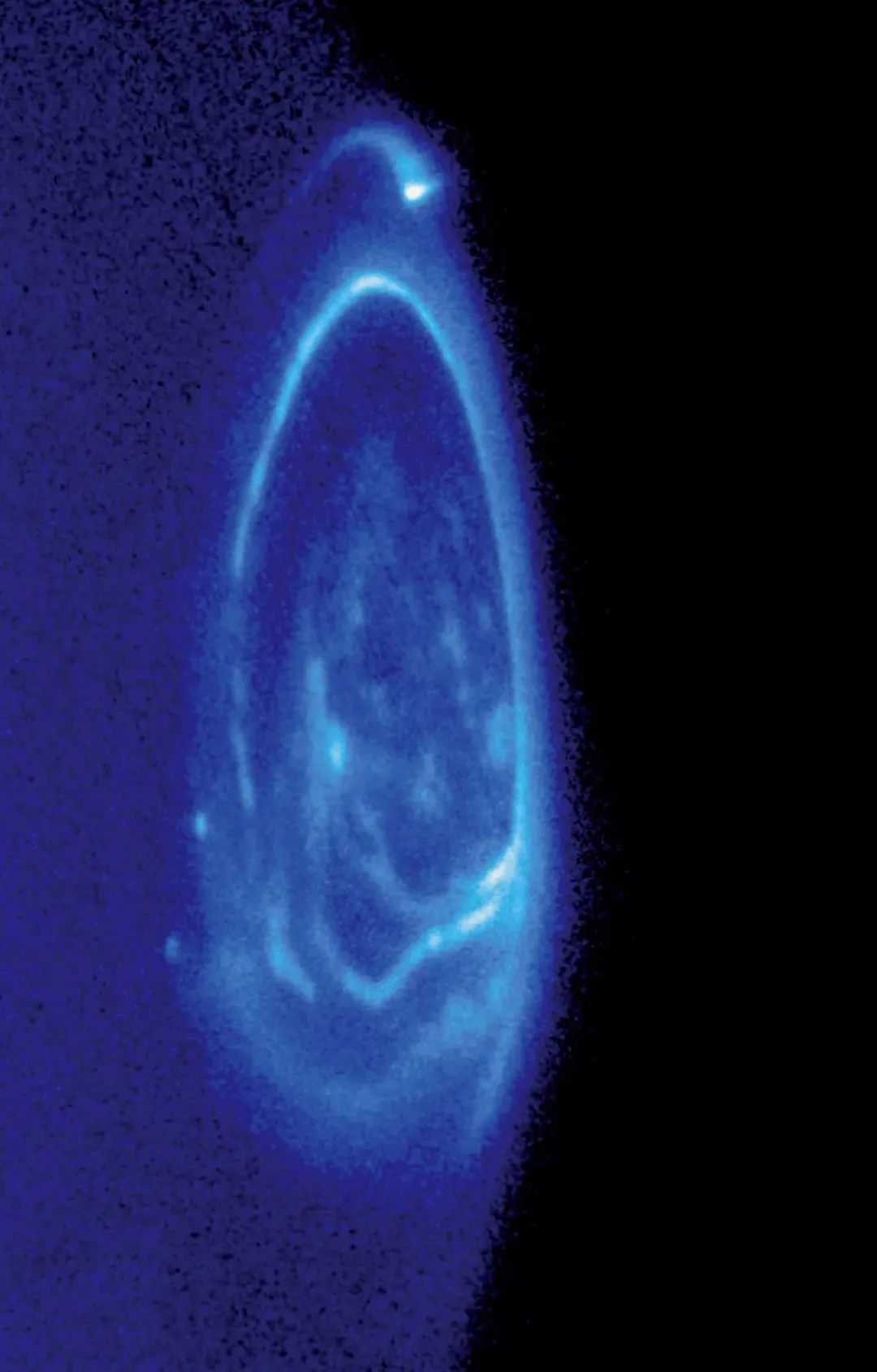
Jupiter's Auroras: Ultraviolet Rings Illuminating the Gas Giant's Poles

A stunning image captures Jupiter’s auroras—dazzling ultraviolet (UV) rings encircling the planet’s north pole—revealing the dynamic interplay between its powerful magnetic field and its retinue of moons. These celestial light shows, invisible to the naked eye but vivid in UV wavelengths, offer a window into the extreme physics governing the solar system’s largest planet.

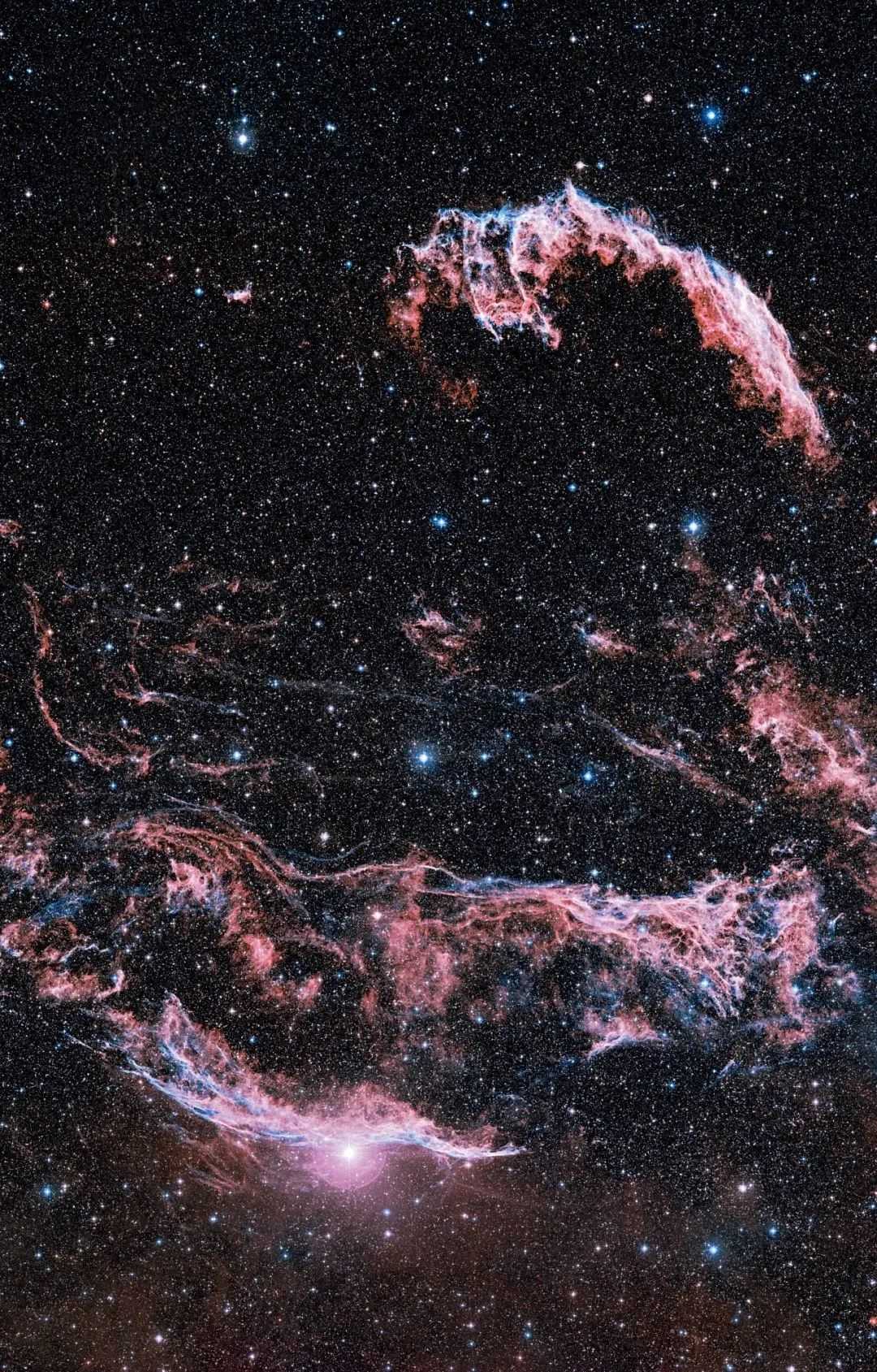
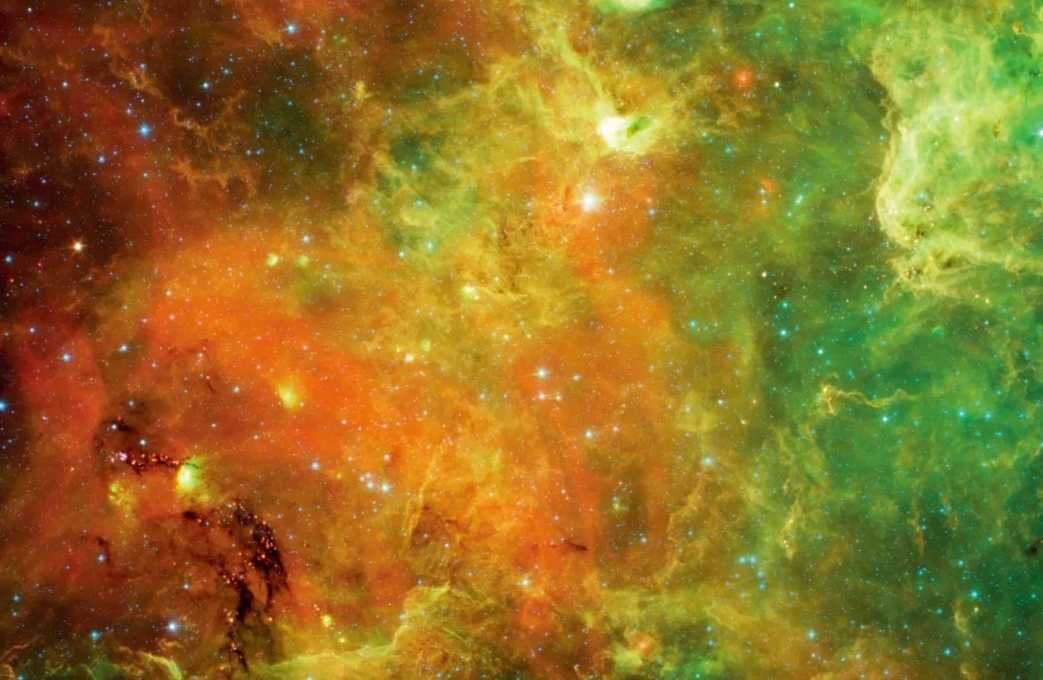
Spitzer’s Infrared View Unveils the Hidden Depths of the North America Nebula (NGC 7000)

A striking image from NASA’s Spitzer Space Telescope captures the North America Nebula (NGC 7000) in infrared light, revealing a cosmic landscape brimming with massive gas clouds and hidden stellar nurseries. Unlike visible-light views, which often show only the nebula’s glowing outer edges, Spitzer’s infrared detectors penetrate the dense dust, exposing the complex interplay of gas, dust, and young stars within this vast stellar nursery.

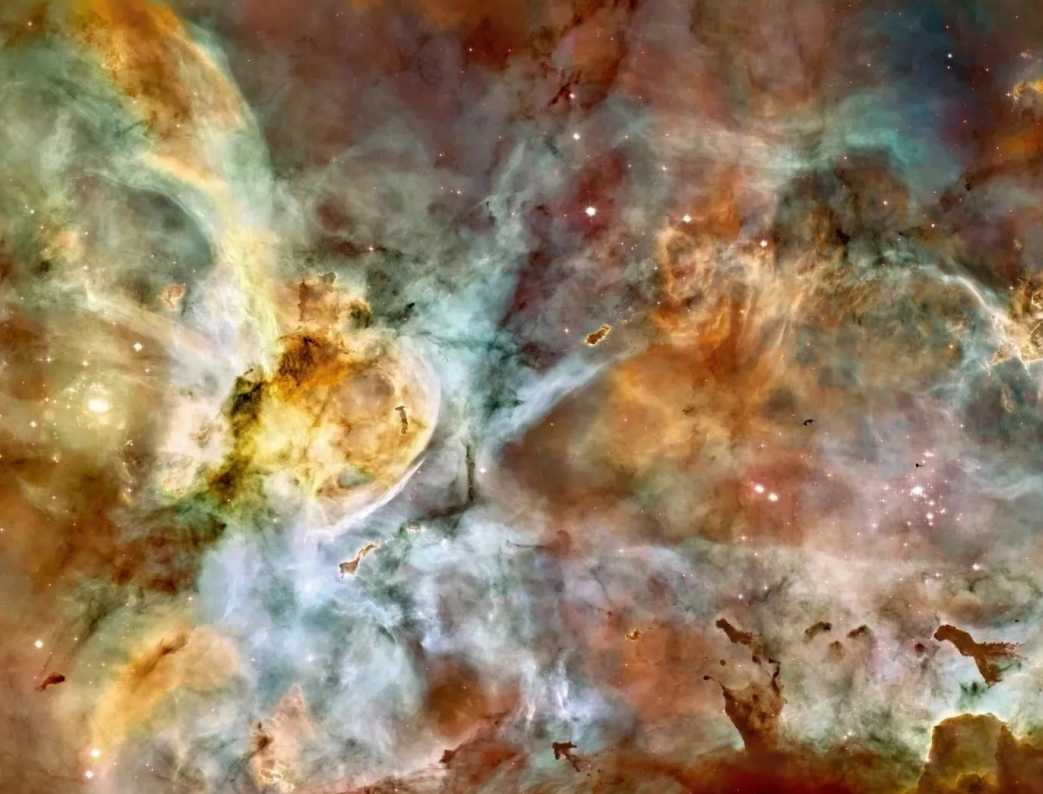
The Carina Nebula: A Massive Stellar Nursery in the Southern Sky

Located between 6,500 and 10,000 light-years from the Solar System, the Carina Nebula is a breathtaking region of cosmic activity visible exclusively from the Southern Hemisphere. Renowned as one of the Milky Way’s most dynamic star-forming regions, it serves as a cradle for some of the galaxy’s most massive and luminous stars, offering the public an opportunity to explore the extreme processes that shape stellar evolution.

The Carina Nebula: A Cosmic Cradle Hidden in the Southern Skies

The Carina Nebula, a celestial marvel nestled between 6,500 and 10,000 light - years from our Solar System, remains a sight exclusive to the Southern Hemisphere. This vast region, a hotbed of cosmic activity, has been pivotal in birthing some of the Milky Way's most massive stars, providing astronomers with a front - row seat to the dramatic processes of stellar formation.

The Cosmic Snow Angel: Hubble Captures S106 IR's Star - Forming Region

In the vast expanse of the constellation Cygnus, about 2000 light - years from Earth, lies a remarkable star - forming region centered around the young star S106 IR. The powerful radiation emitted by this star has enabled the Hubble Space Telescope to capture an image of the surrounding gas and dust, which strikingly resembles a celestial snow angel, a sight that has captivated astronomers and space enthusiasts alike.

Pages